
Human Adipose-Derived Stem Cells (ADSCs), Type 1 Diabetes Donor
INTENDED USE
This product is for research use only (RUO). Not for use in diagnostic or therapeutic procedures.
IMPORTANT USER NOTE
These cells exhibit biological characteristics associated with the obese donor phenotype, which may impact their growth, differentiation, and metabolic behavior compared to cells from lean donors. It is the user's responsibility to determine the suitability of this product for their specific application. Proper training in the handling of human-derived materials is required.
PRODUCT DESCRIPTION
Regeneration Biology offers Human Adipose-Derived Stem Cells (ADSCs) from Type 1 Diabetes (T1D) donors, isolated from the subcutaneous adipose tissue of donors with a clinically confirmed diagnosis of T1D. These multipotent mesenchymal stem cells are cryopreserved at passage 1 (P1) to maximize viability and preserve their native, disease-state characteristics.
This unique cell population offers a crucial in vitro model for investigating the interplay between stem cells and the autoimmune, metabolic, and vascular complications of type 1 diabetes (T1D). Sourced from a disease-specific microenvironment, these ADSCs may exhibit altered paracrine signaling, differentiation potential, and immunomodulatory properties compared to those from healthy donors, offering critical insights for diabetes research and regenerative therapy development.
KEY FEATURES & BENEFITS
Disease-Specific Model: Isolated from verified Type 1 Diabetic donors, enabling research within a pathologically relevant cellular context.
Research-Ready: Cryopreserved at P1, ensuring high viability and functionality for studies on diabetic complications, immunomodulation, and autologous cell therapy.
Characterized Immunophenotype: Express standard mesenchymal stem cell surface markers (CD73, CD90, CD105) and lack hematopoietic markers, as defined by the International Society for Cellular Therapy (ISCT).
Functionally Validated: Each lot is tested for viability, sterility, and multipotent differentiation potential (adirogenic, osteogenic).
Comprehensive Donor Profile: Supplied with detailed donor information, including diabetes history, medication (e.g., insulin), and common comorbidities.
QUALITY CONTROL SPECIFICATIONS
Each lot is tested to meet the following release criteria:
Viability (post-thaw): ≥ 80% (Test Method: Trypan Blue Exclusion)
Cell Yield per Vial: ≥ 1 million or 5 million viable cells (Test Method: Cell Count)
Adherent Growth: Favorable for fibroblastic, spindle-shaped morphology (Test Method: Microscopic Evaluation)
Surface Marker Expression: Positive (≥95%): CD73, CD90, CD105; Negative (≤5%): CD14, CD34, CD45, HLA-DR (Test Method: Flow Cytometry)
Multilineage Differentiation*: Positive for Oil Red O (Adipogenesis) and Alizarin Red S (Osteogenesis) (Test Method: Functional Staining)
Microbiological Sterility: No growth (Test Method: USP <71>)
Mycoplasma: Negative (Test Method: PCR or Culture Method)
APPLICATIONS
Diabetes Research: Investigate the impact of the T1D microenvironment on stem cell function, including altered angiogenesis, wound healing, and immunomodulation.
Diabetic Complications: Model cellular mechanisms of diabetic neuropathy, nephropathy, retinopathy, and impaired tissue regeneration.
Immunology & Autoimmunity: Study the interaction between ADSCs and immune cells (e.g., T-cells) in an autoimmune context.
Drug Screening & Discovery: Test efficacy of novel therapeutics aimed at improving stem cell function or mitigating diabetic complications.
Regenerative Medicine: Explore the potential and limitations of autologous stem cells from diabetic patients for cell-based therapies.
HANDLING & STORAGE
Storage: Store in the vapor phase of liquid nitrogen (below -135°C) immediately upon receipt. Do not store at -80°C for long-term preservation.
Shipment: Shipped on dry ice. Upon receipt, transfer vials to liquid nitrogen storage immediately.
Handling: Use personal protective equipment. All materials handling human primary cells should be treated as potentially infectious and handled under Biosafety Level 2 (BSL-2) conditions.
TYPICAL DONOR DEMOGRAPHICS & CLINICAL HISTORY
Donors are carefully selected and characterized. A typical profile includes:
Diagnosis: Clinically confirmed Type 1 Diabetes Mellitus.
Age Range: 18 - 65 years
Sex: Male and Female donors available
Diabetes Duration: Variable (provided per lot)
Medication: Insulin therapy
Common Comorbidities: May include autoimmune conditions (e.g., Thyroiditis) and early-stage microvascular complications.
ORDERING INFORMATION
| Catalog Number | Description | Format |
|---|---|---|
| ADSC-T1D-RG22001-1M | Human ADSCs, Type 1 Diabetes Donor | 1 × 10⁶ cells/vial |
| ADSC-T1D-RG22001-5M | Human ADSCs, Type 1 Diabetes Donor | 5 × 10⁶ cells/vial |
Recommended Controls:
| Catalog Number | Description | Format |
|---|---|---|
| ADSC-HLRG-11001-1M | Human ADSCs, Healthy Lean Donor (Control) | 1 × 10⁶ cells/vial |
CELL CULTURE PROTOCOL
Thawing of Frozen Cells:
Upon receipt of frozen human adipose-derived stem cells (hADSC), it is crucial to thaw and culture the cells to maximize cell viability immediately. Delays in this process can lead to decreased cell health and functionality.
To effectively thaw the cells, submerge the vial containing the frozen cells in a preheated water bath at 37°C. Gently agitate the vial for 1-2 minutes to facilitate uniform thawing. Be careful to keep the cap of the vial above the water level to prevent potential contamination from the water bath, which could compromise sterility.
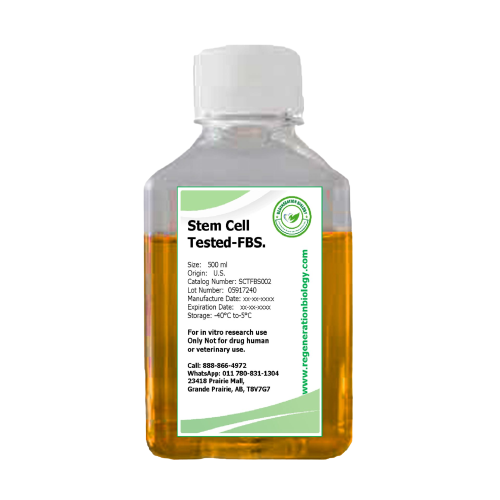
Once the cells are fully thawed, transfer the content of the vial into a sterile 15 mL conical tube that contains 5 mL of fresh Adipose-derived Stem Cell Growth Medium (STEM10). This medium is specifically formulated to support hADSC growth and ensure optimal recovery following thawing.
Following the transfer, centrifuge the cells at a speed of 1,000 rpm (approximately 220 × g) for 5 minutes at room temperature. This step helps to pellet the cells, facilitating the removal of any cryoprotectant and cellular debris.
After centrifugation, carefully aspirate the supernatant without disturbing the cell pellet. Re-suspend the pellet in fresh Adipose-derived Stem Cell Growth Medium, ensuring thorough mixing to maintain cell viability.
Transfer the re-suspended cells into either one 100 mm culture dish or one T75 flask, depending on your experimental requirements. Maintain the culture at 37°C in a humidified atmosphere with 5% CO₂. Change the medium every 2-3 days, monitoring the cells until they achieve a density of 70-80% confluence, indicating readiness for subculturing.
Standard Culture Procedure:
Once the cells reach a confluence of 70-80%, perform a careful medium change by first aspirating the existing growth medium. Rinse the cells gently with 5 mL of phosphate-buffered saline (PBS) in a T75 flask to remove any residual serum or growth factors that might inhibit trypsinization.
Add 3-5 mL of 0.25% Trypsin-EDTA directly to the flask. Incubate the cells at 37°C for approximately 5 minutes. This enzyme mixture will cleave the adhesive proteins that anchor the cells to the culture surface, thereby enabling cell detachment.
Once the incubation period is complete, neutralize the trypsin by adding 2-3 volumes of Adipose-derived Stem Cell Growth Medium to ensure the trypsin action is halted and to provide nutrients for cell recovery.
Proceed with centrifugation at 1,000 rpm (approximately 220 × g) for 5 minutes. After the centrifugation step, carefully re-suspend the cell pellet in the desired volume of growth medium, ensuring an even distribution of cells.
Seed the new culture vessels at a density of 5 × 10³ cells/cm². This seeding density is essential for optimal cell growth and expansion. Continue to change the medium every 2-3 days, monitoring the cells until they reach 70-80% confluence before considering additional passaging.
KEYWORDS
Adipose-derived stem cells for diabetes research, Type 1 diabetes stem cell therapy, Human ADSCs for regenerative medicine, Stem cell therapy for pancreatic regeneration, Adipose stem cells for insulin production, Regenerative biology stem cell products, ADSCs for endocrine disorder research, Human fat-derived stem cells, Cryopreserved adipose-derived stem cells, Clinical-grade ADSCs for research, Stem cells from Type 1 diabetes donor, ADSCs for beta-cell regeneration, Stem cell applications in diabetes treatment, ADSC cryovials for research labs.
CONTACT INFORMATION
Facebook – https://www.facebook.com/plasticconsumables
Instagram – https://www.instagram.com/plasticconsumables/
LinkedIn – https://www.linkedin.com/company/plastic-consumables/about/
Twitter (X) – https://x.com/plastic_consum
YouTube – https://www.youtube.com/@PlasticConsummablesLabware